Saint Cybard (Eparchius in Latin, sometimes called Eparch or Cibard) was a priest and recluse of the 6th century. Born in Périgord around 504, he lived for nearly forty years shut away in a cave beneath the ramparts of Angoulême, praying, caring for the poor and ransoming captives. He died there in 581. Patron of the diocese of Angoulême, his feast day is July 1.
Who was Saint Cybard?
Cybard is one of the most popular saints of the Charente, and also one of the best attested of his time. His contemporary Gregory of Tours, the historian of the Franks, speaks of him in his writings: he presents him as a recluse of Angoulême of great holiness, who healed the sick and obtained the release of prisoners. Other details of his life come from later accounts and local traditions, which must be read with more caution. The sources do not always agree on the figures: thirty-nine years of reclusion are mentioned, but some notices, following Gregory of Tours, count forty-four.
His Latin name, Eparchius, comes from Greek and suggests the idea of protection. Pronounced "Saint Épar", it gave the forms Cybard, Cibard, Ybard or Ybars, found in many place names in southwestern France.

From Périgord to Angoulême
Cybard came from Périgord. Tradition places his birth at Trémolat, in a loop of the Dordogne. As a young man he became a cleric in Périgueux, then experienced monastic life at the monastery of Sessac, which some identify with Issigeac. But he was looking for an even more withdrawn life. He went to Angoulême, where Bishop Aptonius ordained him a priest around 542. The bishop gave him a place of retreat: a cave cut into the cliff, beneath the north rampart of the town, above the Charente.
A recluse at the service of the poor
In his cave, Cybard led the life of a recluse: he no longer went out, prayed constantly and lived on the offerings brought by the faithful. A few disciples shared his life in nearby cells. His austerity struck his contemporaries. His biographers report that no one, not even his closest servant, ever saw him eat, and that he answered those who wondered at it: "Faith does not fear hunger."
Yet his reclusion was not a flight. Visitors crowded to his door, and he received them. All the money and gold he was given, he distributed to the poor or used to ransom captives. Gregory of Tours tells that he obtained from judges the release of prisoners and that healings were attributed to him. A local tradition even says that in 558 he ransomed one hundred and seventy-five slaves at once. He died in his cave on July 1, 581, at about seventy-seven years of age.
The abbey of Saint-Cybard and the saint's cult
After his death, his disciples stayed near his tomb. Their community gave rise to the abbey of Saint-Cybard, built at the foot of the cave, on the bank of the Charente. Destroyed by the Vikings in the 9th century, rebuilt around 950, it became Benedictine and was attached to Cluny around 1096. It kept the saint's relics until 1568: that year, during the Wars of Religion, the Protestants seized Angoulême, ruined the abbey and burned its relics. Sold as national property during the Revolution, the abbey has left remains that are now part of the site of the International City of Comics and Image.
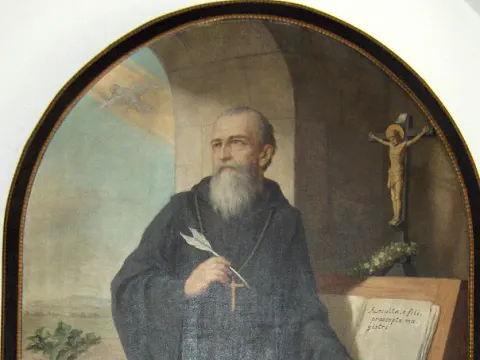
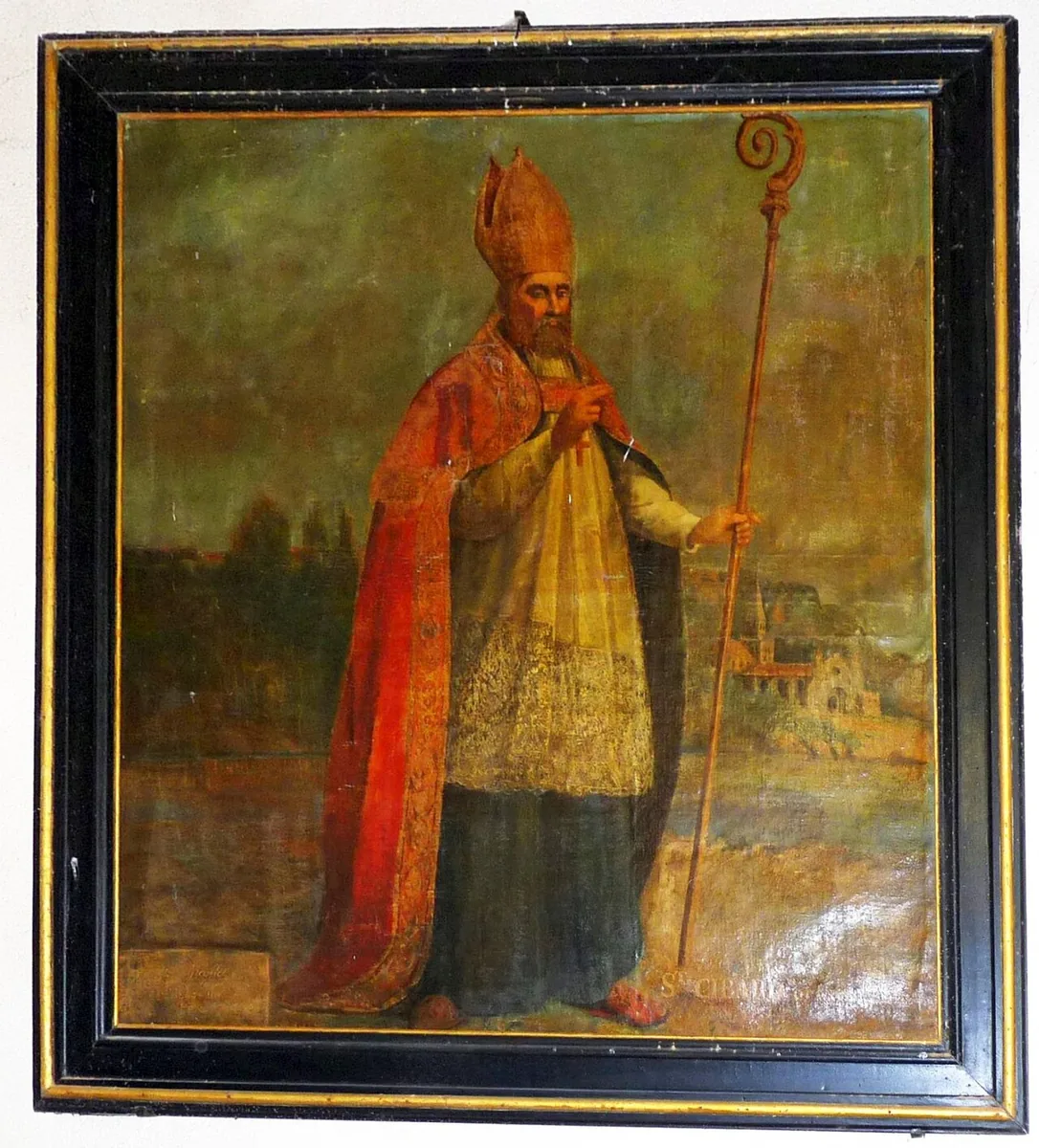
The cult of Saint Cybard remains very much alive in the region. He is patron of the diocese of Angoulême, and the Roman Martyrology commemorates him on July 1. Many churches in the Charente are dedicated to him: in Angoulême itself, in the district that bears his name, and at La Rochefoucauld, Roullet, Magnac-sur-Touvre, Plassac, Pranzac and Dignac. Several villages bear his name: Saint-Cybard in the Charente and the Dordogne, Saint-Cibard in the Gironde, Saint-Ybard in the Corrèze, Saint-Ybars in the Ariège, Saint-Cybardeaux in the Charente. He is also venerated by the Orthodox Church. He is shown as a monk or priest, sometimes in front of his cave.

What can we learn from Saint Cybard?
Cybard lived shut away, and yet he was one of the most open men of his time. His cave was a place of prayer, but also a place of welcome, from which came alms for the poor and ransom for captives. He reminds us that a hidden life with God bears fruit for others, and that true freedom is meant to be shared. You can pray to him for prisoners, for people held in slavery, for the poor, and for those who seek God in silence.
To pray with him, see the prayer to Saint Cybard and the novena to Saint Cybard.
Where to pray to Saint Cybard
- Angoulême (Charente): the cave where he lived, beneath the north rampart, and the remains of the abbey of Saint-Cybard, on the bank of the Charente.
- The church of Saint-Cybard in Angoulême: the parish church of the district that bears his name.
- La Rochefoucauld, Roullet, Plassac (Charente): churches dedicated to him.
- Trémolat (Dordogne): the village where, according to tradition, he was born.
Discover also
- Saint Gregory of Tours, his contemporary, who handed down his memory.
- Saint Front of Périgueux, the apostle of Périgord, his native land.
- Saint Leonard of Noblac, another 6th-century hermit, patron of prisoners.
- Saint John of Matha, founder of an order devoted to ransoming captives.