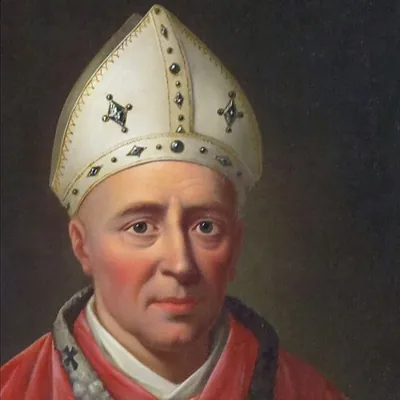
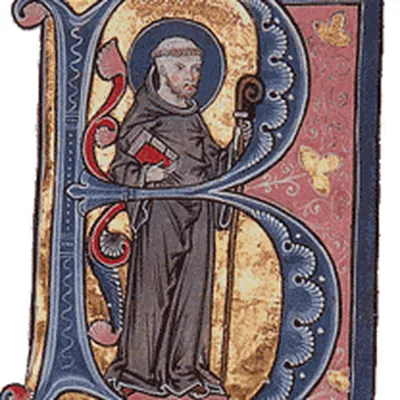
Saint Constabilis (Costabile Gentilcore in Italian) was an Italian Benedictine monk, born around 1070 at Tresino, in the Cilento, who died on February 17, 1124 at the abbey of the Most Holy Trinity of Cava, near Salerno. Entrusted to this abbey as a child, he became its fourth abbot and founded the fortified town of Castellabate, of which he is the patron saint. His feast day is February 17.
Who was Saint Constabilis?
Constabilis belongs to the great line of the first abbots of Cava, a monastery founded at the beginning of the 11th century by Saint Alferius Pappacarbone in a cave in the hills of Campania. Under its first abbots, Cava became one of the most important monastic centers of southern Italy, at the head of many priories and estates. Constabilis governed it for only a short time, but he left the memory of a gentle abbot attentive to each of his monks. The sources on his life are brief: they come mainly from the tradition of the abbey, which counts him among its "holy fathers".
A child entrusted to the abbey
Constabilis was born around 1070 at Tresino, on the coast of the Cilento, south of Salerno. At seven, his parents entrusted him to the abbot of Cava, Saint Leo I. It was then common for families to offer a child to a monastery, where he received an education and could, if he wished, embrace monastic life. Constabilis grew up in the shadow of the Arsicia cave, where Saint Alferius had begun to live as a hermit, and became a monk under the Rule of Saint Benedict. He was formed by two great abbots, Leo and then Peter Pappacarbone, under whom the abbey grew strongly.
The fourth abbot of Cava
On January 10, 1118, Abbot Peter, already very old, chose him as coadjutor, that is, as an assistant called to succeed him. On Peter's death, in 1123, Constabilis became the fourth abbot of Cava. His abbacy lasted only a few months, but tradition remembers the way he governed: with modesty and care, seeking to meet both the needs of the whole community and those of each monk in particular. He is the image of a superior who makes himself a servant, in the spirit of the Rule of Saint Benedict.
The founder of Castellabate
The abbey of Cava owned many estates in the Cilento, a coastal region then exposed to raids from the sea. On October 10, 1123, Constabilis began the construction of a castle on a height, no doubt to shelter the inhabitants of the area. Around this fortress grew a town that took the name Castrum Abbatis, "the abbot's castle": present-day Castellabate. For this reason, Constabilis is venerated as the founder and patron saint of the town.
His death and his cult
Constabilis died on February 17, 1124, at about fifty-three. He was buried in the abbey church, above the Arsicia cave where Saint Alferius had lived. Simeon succeeded him. After his death, tradition says that he appeared to his successors, and the monks called on him as protector of the abbey's ships: an old depiction shows him saving a ship of the monastery in distress. In 1893, Pope Leo XIII officially recognized the cult of the first four abbots of Cava, Alferius, Leo, Peter and Constabilis. He is also the patron of the diocese of Vallo della Lucania. He is shown as a Benedictine abbot, in the black habit and with a crozier.

What can we learn from Saint Constabilis?
Saint Constabilis spent almost his whole life in the same monastery, from the age of seven. His holiness is one of faithfulness and service. Once abbot, he did not seek to dominate, but to care for each person. And he understood that the charity of a monastery also reaches the neighboring population, which he protected by founding Castellabate. You can pray to him for religious communities, for leaders who want to serve those they lead, for sailors and for the people of the Cilento.
To pray with him, see the prayer to Saint Constabilis and the novena to Saint Constabilis.
Where to pray to Saint Constabilis
- Cava de' Tirreni (Campania, Italy): the abbey of the Most Holy Trinity, where he lived and was buried, with the other holy fathers of Cava.
- Castellabate (Campania): the town he founded and of which he is the patron saint.
Discover also
- Saint Alferius Pappacarbone, founder of the abbey of Cava.
- Saint Peter Pappacarbone, the abbot who chose him as coadjutor.
- Saint Benedict of Nursia, whose rule he followed.