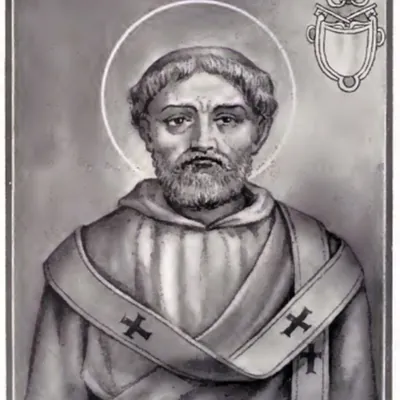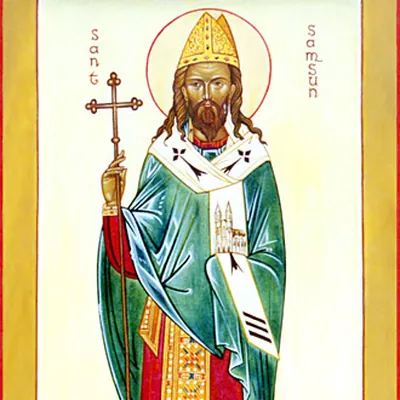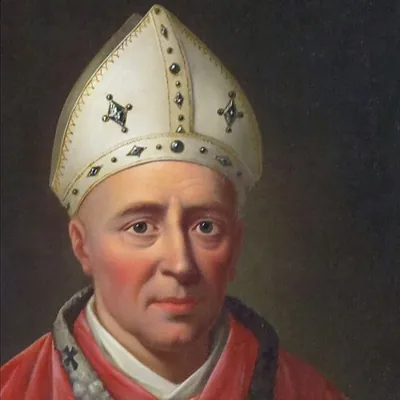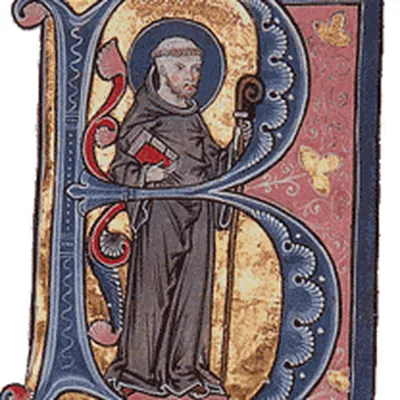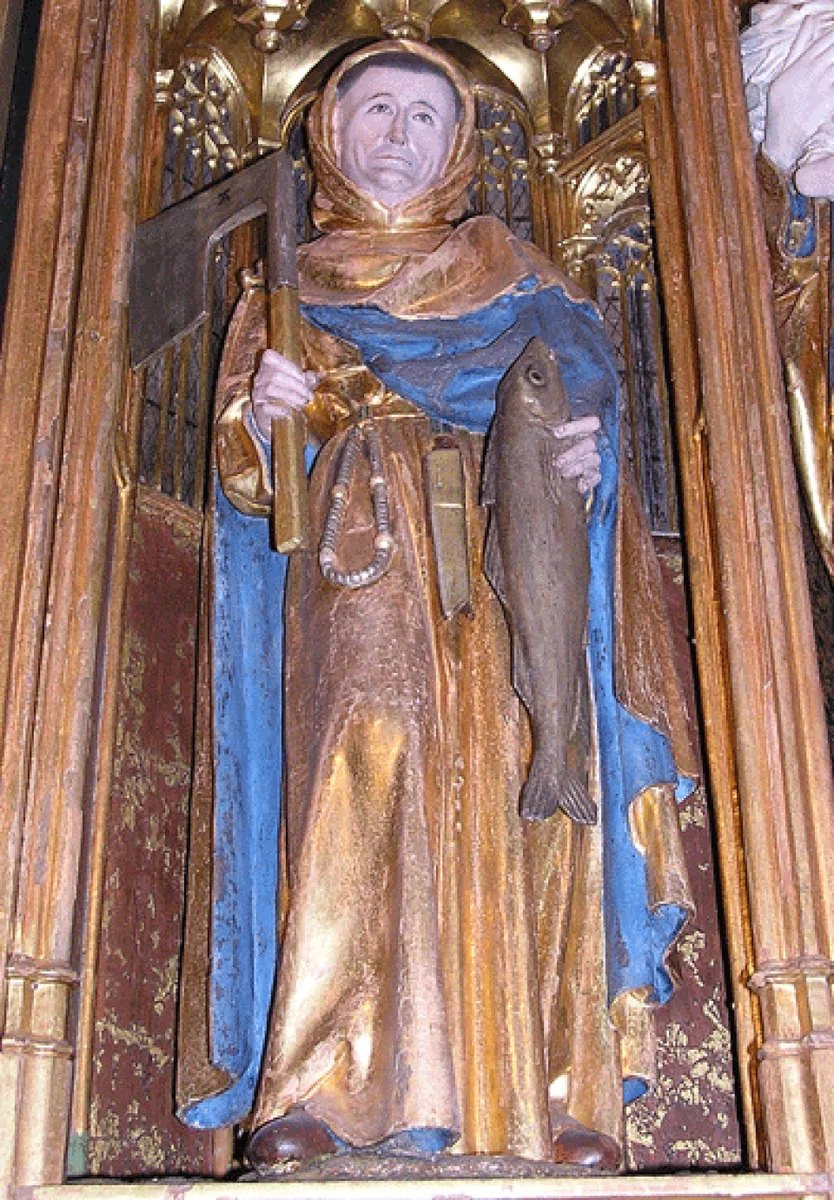
Saint Botvid was a Swedish lay missionary of the late eleventh and early twelfth centuries. A native of Södermanland, he discovered Christianity on a trading voyage to England, then returned to proclaim the Gospel in his home region, around Lake Mälaren. According to tradition, he was killed with an axe around 1120 by a slave he had freed and baptized. Patron of Södermanland with Saint Eskil, he gave his name to the municipality of Botkyrka, south of Stockholm. His feast day is July 28.
Who was Saint Botvid?
Botvid lived at the time when Sweden was slowly passing from Norse paganism to Christianity. The first missions, that of Saint Ansgar in the ninth century, then those from England and Germany in the eleventh century, had not yet swept away the old cults. The pagan temple at Uppsala still stood, and Christian kings had to reckon with strong opposition.
What we know of Botvid comes from a Latin legend written in the Middle Ages, probably in the twelfth or thirteenth century, and preserved in Swedish liturgical books. It contains a plausible core, but its details cannot be verified, so a certain caution is needed.
A merchant who became a missionary
Like many Scandinavians of his time, Botvid traded by sea. In England he came into contact with Christians and asked for baptism. Back home, he did not keep his faith to himself.
According to tradition, he was associated with the English missionaries sent to Sweden at that time, in particular Saint Sigfrid, apostle of Värmland and Västergötland, and Saint Eskil, the martyred bishop of Strängnäs. Botvid traveled through the villages around Lake Mälaren, spoke of Christ to his neighbors and brought many of them to baptism.
He was a layman, not a priest, which makes him an unusual figure among the Scandinavian saints. For English-speaking Catholics, his story is also a reminder of the role England played in bringing the faith to Sweden.
The death of Botvid
The legend tells that Botvid had ransomed a slave from the far shore of the Baltic, perhaps a Finn or a Wend. He instructed him in the faith and had him baptized. Then he decided to set him free and take him home by boat, with a companion, in the hope that the freed man would proclaim the Gospel to his own people.
During the voyage, while they had stopped on an island of the archipelago, the man killed Botvid and his companion with an axe, seized the boat and fled.
According to the story, birds guided those searching for the missing men to the bodies. Botvid was then buried in the church of his region, which took his name. Local tradition also says that a spring gushed forth at the place where his coffin was set down near Lake Bornsjön while it was being carried: this is Saint Botvid's spring, still known today.
Reading the legend today
The story of Botvid does not end with a triumph. The man he freed and baptized betrayed him. Yet the medieval Church did not see his death as a failure: it honored him as a martyr, a witness who had given everything for the Gospel. His trust may seem naive, but it reflects the trust of Christ, who chose Judas among the Twelve and still loved him.
The legend also shows the faith spreading through ordinary people: a merchant, his neighbors, a freed slave. Long before Sweden had parishes and dioceses everywhere, the Gospel traveled along trade routes and through personal friendships.
Devotion to Saint Botvid
Botvid was venerated in Södermanland from the twelfth century. His cult was local but lively, and the medieval Swedish liturgical calendars kept his feast on July 28. After the Lutheran Reformation, his memory survived mostly in place names.
Why is Saint Botvid the patron of Södermanland?
Botvid is honored as patron of Södermanland, his home province, where he preached and where his tomb drew pilgrims, together with Saint Eskil. Beyond this local patronage, he is a fitting intercessor for lay people involved in spreading the Gospel, for merchants and travelers, and for Sweden and the unity of Christians in Scandinavia.
Botvid is a layman who received the faith far away and brought it back home. He reminds us that evangelization is not only the work of priests but of every baptized person. His act toward the slave, whom he set free and wanted to send home as a messenger of Christ, shows a daring charity, even though it cost him his life.
Symbols and how to recognize Saint Botvid in art
The coat of arms of the municipality of Botkyrka shows him with an axe, the instrument of his death, and a fish, a reminder of his sea voyages. These are his two attributes.
Where to pray to Saint Botvid
- Botkyrka (Stockholm County, Sweden): the medieval church that bears his name and keeps his memory.
- Salem (Stockholm County): Saint Botvid's spring, near Lake Bornsjön.
- Stockholm: the Catholic Cathedral of Saint Eric, where you can entrust the Church in Sweden to God.
You can also pray with our prayer to Saint Botvid or the novena to Saint Botvid, which ends on his feast day.
Discover also
- Saint Sigfrid of Sweden, the English missionary to Sweden.
- Saint Ansgar, the first apostle of Sweden in the ninth century.
- Saint Eric of Sweden, king and patron of Sweden.
- Saint Henry of Uppsala, martyred bishop and apostle of Finland.
- Saint Bridget of Sweden, patron saint of Europe.