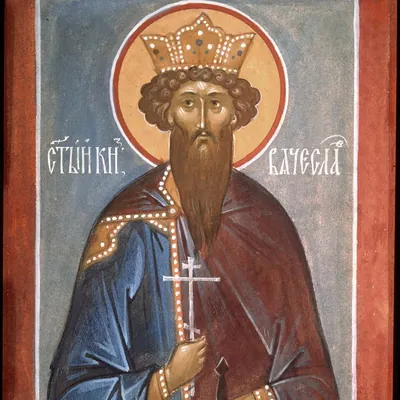
Saint Tuotilo (also spelled Tutilo or Tutilon) was a monk of the abbey of Saint Gall, in present-day Switzerland, who died around 913 or 915. Musician, poet, composer, painter, sculptor and goldsmith, he is one of the great figures of the late Carolingian renaissance. A friend of Notker the Stammerer, he placed all his talents at the service of the praise of God. His feast day is March 28.
Who was Saint Tuotilo?
Tuotilo lived at a time when the abbey of Saint Gall was one of the most brilliant centers of culture in Europe. Its monks copied and decorated manuscripts, composed chants for the liturgy and taught in a renowned school. Tuotilo was trained there and spent his life there. We know him mainly through the monk Ekkehard IV, who wrote a chronicle of the abbey in the 11th century, the Casus sancti Galli. This account, written more than a century after his death, paints a lively portrait of him, but one that is sometimes embellished: it must be read with caution. Even his origin is debated: some traditions say he was born in Ireland, but many historians think he came from the Saint Gall region itself.
A monk of many talents
At the school of Saint Gall, Tuotilo became friends with two other pupils, Notker, later nicknamed the Stammerer, and Ratpert. The three young monks followed the teaching of renowned masters, including the Irishman Moengal, who passed on to them his love of music. Notker would become a great author of liturgical sequences, Ratpert a historian of the abbey, and Tuotilo an all-round artist.
Ekkehard describes him as a sturdy man, eloquent, with a fine voice, skilled at playing several instruments, including the harp. He taught music to the sons of noble families entrusted to the abbey. He was also a painter, sculptor and goldsmith, and the abbot often sent him traveling on the monastery's business. The chronicler adds that, despite his talents and successes, he remained a monk faithful to prayer, who did not let himself be turned away from the divine office.
The musician and the artist
Tuotilo is best known as a composer of tropes. These chants, very popular in his time, added new words and melodies to the texts of the Mass, to unfold their meaning more fully. The Christmas trope Hodie cantandus est ("Today we must sing") is traditionally attributed to him. Most of his other compositions have been lost, or cannot be attributed to him with certainty.
His most famous work may be a visual one: the binding of the Evangelium longum, a great Gospel book made at Saint Gall toward the end of the 9th century, is made of carved ivory plaques. Ekkehard attributes one of them to Tuotilo, showing in particular the Assumption of the Virgin and an episode from the legend of Saint Gall, and the book is still kept in the abbey library. Ekkehard also credits him with works made for other churches, but they have not survived.
Devotion and memory
Tuotilo died at Saint Gall around 913 or 915. He was buried in a chapel dedicated to Saint Catherine, which later took the name of Saint Tuotilo's chapel: a sign that he was venerated as a saint. His cult has remained local, linked to the abbey and to the Benedictine tradition, and he is celebrated on March 28. He has no fixed attribute: he can be shown as a Benedictine monk, with a harp or sculptor's tools, in memory of his talents.

What can we learn from Saint Tuotilo?
Tuotilo shows that beauty can be a path to God. He placed his voice, his hands and his intelligence at the service of the liturgy, so that the prayer of the Church would be more beautiful and more alive. His talents did not draw him away from monastic life: he remained a monk, faithful to the office and to his community. You can pray to him for church musicians, cantors and organists, for artists and craftsmen, and for all who seek to serve God with their gifts.
To pray with him, see the prayer to Saint Tuotilo and the novena to Saint Tuotilo.
Where to pray to Saint Tuotilo
- Saint Gall (Switzerland): the former abbey, now a cathedral, where he lived and was buried; the abbey library keeps the Gospel book he is said to have adorned.
- In any church, on March 28, his feast day, especially during a sung Mass.
Discover also
- Saint Gall, founder of the hermitage that became Tuotilo's abbey.
- Saint Benedict of Nursia, whose rule the monks of Saint Gall followed.
- Saint Gregory the Great, to whom tradition links the chant of the Latin Church.
- Saint Cecilia, patron saint of musicians.